Research outputs that inspire and engage
In an age of social media soundbites, how do we make sure that research outputs are compelling enough to inspire and influence decision-makers and those who wield power to make changes? In July we brought together a group of people who commission, conduct and use research to inform policy to hear from them what works…
Read More
The challenges of researching risk
We are frequently asked to conduct research projects where we wish people to tell us how they feel about and are likely to respond to risk. Exploring risk is complex. Our tendency is to assume that we make rational decisions regarding the risks we face – weighing up likelihood and potential cost to decide what (if any) mitigations we will put in place….but that is rarely the case in practice. So, what do we need to think about when undertaking research related to risk?
Read More
Face to face research - is it the right time to return?
At Community Research, we have been offering purely online approaches since the start of the pandemic. Of course we haven’t wanted to put our participants or our researchers at any risk. But, with restrictions lifted, it is time for us to review this. We are keen to get back and speak to people in person if and when there are clear advantages.
Read More
Understanding the Needs of Rural Communities
Citizens Advice wanted to understand the impacts of temporary post office closures (and their replacement with outreach services) on rural communities. We took a 'community view' approach, recruiting several residents, community leaders and SME owners within each village to get a rounded view of how the community as a whole used traditional post offices, and the impacts of their closure or of the shift to mobile post-office services (provided, for example, from a van a few hours a week).
Read More
Researchers ask questions don't they? - Not always!
The market research industry is based on asking questions about, amongst other things, people’s behaviour. Asking well-designed questions is part of our core skill-set….but, so is knowing that asking questions is NOT always the best or the only thing to do!
Read More
A seven-minute explanatory video? In a quant survey? Yes – it worked!
One of the challenges we face when trying to measure opinion on difficult policy areas is that quantitative surveys can miss the complexities and nuance of the issues. In contrast, deliberative research enables us to give a small number of people the time and information they need to come up with an informed ‘citizen’ perspective – something that is not possible in a 15-minute survey… or is it?! Well – not quite, but we recently tried something that came a bit closer to getting a more informed opinion from a nationally representative sample.
Read More
Taking the Citizens’ Jury online
A recent brief from the Legal Services Board (LSB) on a contentious policy issue meant we had to take a different approach - replicating the Citizens Jury approach, but doing it all online. Read more here…
Read More
The return of face-to-face research?
Things are gradually returning to ‘normal’, but we still need a considered approach before we go back to face-to-face research. Here we talk about how we’ll make decisions about when face-to-face is the right approach.
Read More
Lessons from our research on people’s relationship with the water environment
Recently we have been researching how people value and understand the water environment on behalf of the Consumer Council for Water. Whilst the research was in relation to perceptions of the water environment, it has broader applications in terms of providing insights into people’s relationship with the environment as a whole and the dynamics between the consumer and citizen perspective.
Read More
Undertaking research about innovation, technology and the future
We are increasingly being asked to conduct research which seeks to understand people’s responses and reactions to innovation and technology. Sometimes this includes technology that they are as yet unfamiliar with, but they will come across and get used to over the next decade or so. We have learned a lot about the best way to tackle such subjects and we recently also held a discussion with a number of regulators and consumer bodies to share ideas and learning on this. We thought we should share the conclusions.
Read More
Ethnically Inclusive Research - Our Commitments
We previously committed to develop some explicit commitments for making our research more racially and ethnically inclusive and here they are. We’d welcome your thoughts, comments and additions.
Read More
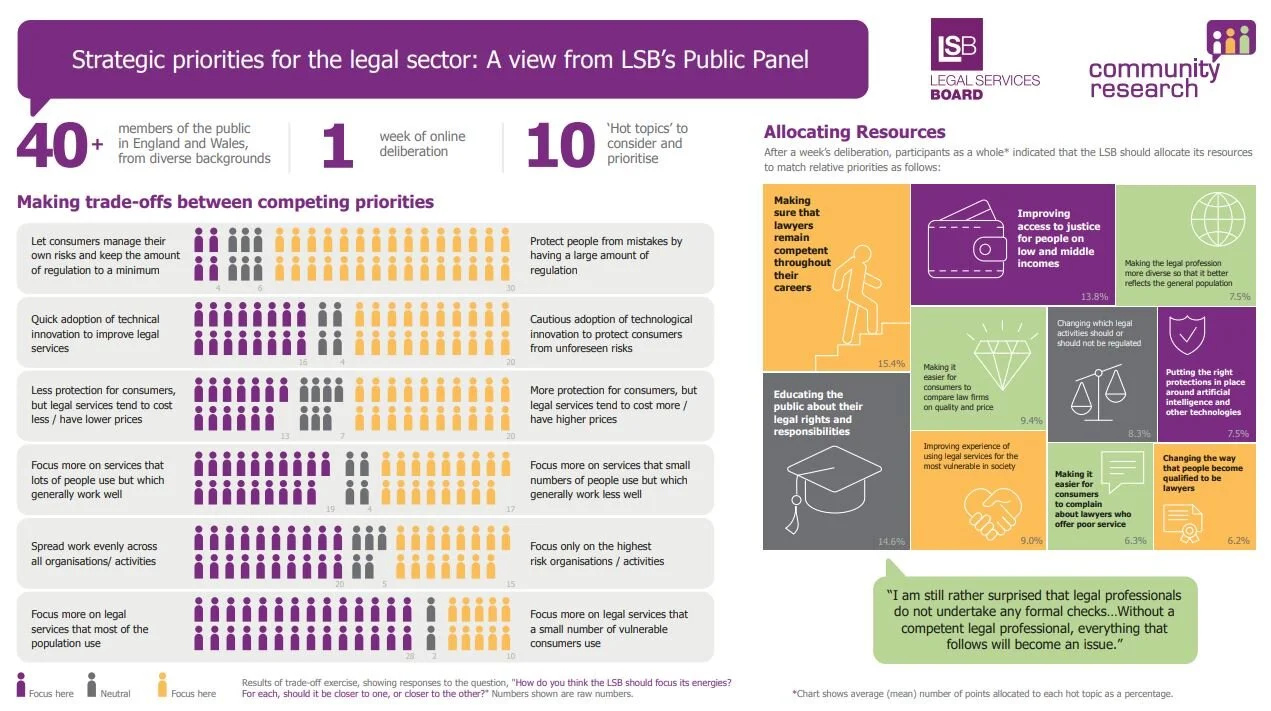
Involving the public in difficult trade-offs and strategic priorities
The Legal Services Board (LSB) is developing a new strategy for legal services regulation. It wanted to understand the needs and priorities of members of the public to inform the development of the strategy. Under ordinary circumstances they might have wanted to run some workshops with a cross-section of consumers … but of course this was not going to be possible during the Summer of 2020.
Read More
A racially inclusive future for research: how can we make it a reality?
2020 will be defined not just by a global pandemic, but also by the power and passion of the Black Lives Matter (BLM) movement and its impact on public and corporate consciousness. The BLM movement draws a line in the sand and calls on every one of us to speak up and play our part in building a racially inclusive future. At Community Research, we are pulling together an explicit set of commitments to make our own research more racially inclusive, from the inception of research briefs right through to talking about the findings.
Read More
Virtual (new) reality: embracing online focus groups
The focus group has always been the stalwart in the researcher’s toolbox of qualitative methods. While we’ve used online qualitative methodologies (such as online discussion forums) routinely for a while now, but always favoured in-person focus groups. We switched to online focus groups when face-to-face was no longer an option, but now we’re starting to realise some of the benefits. Here are some of our lessons so far…
Read More
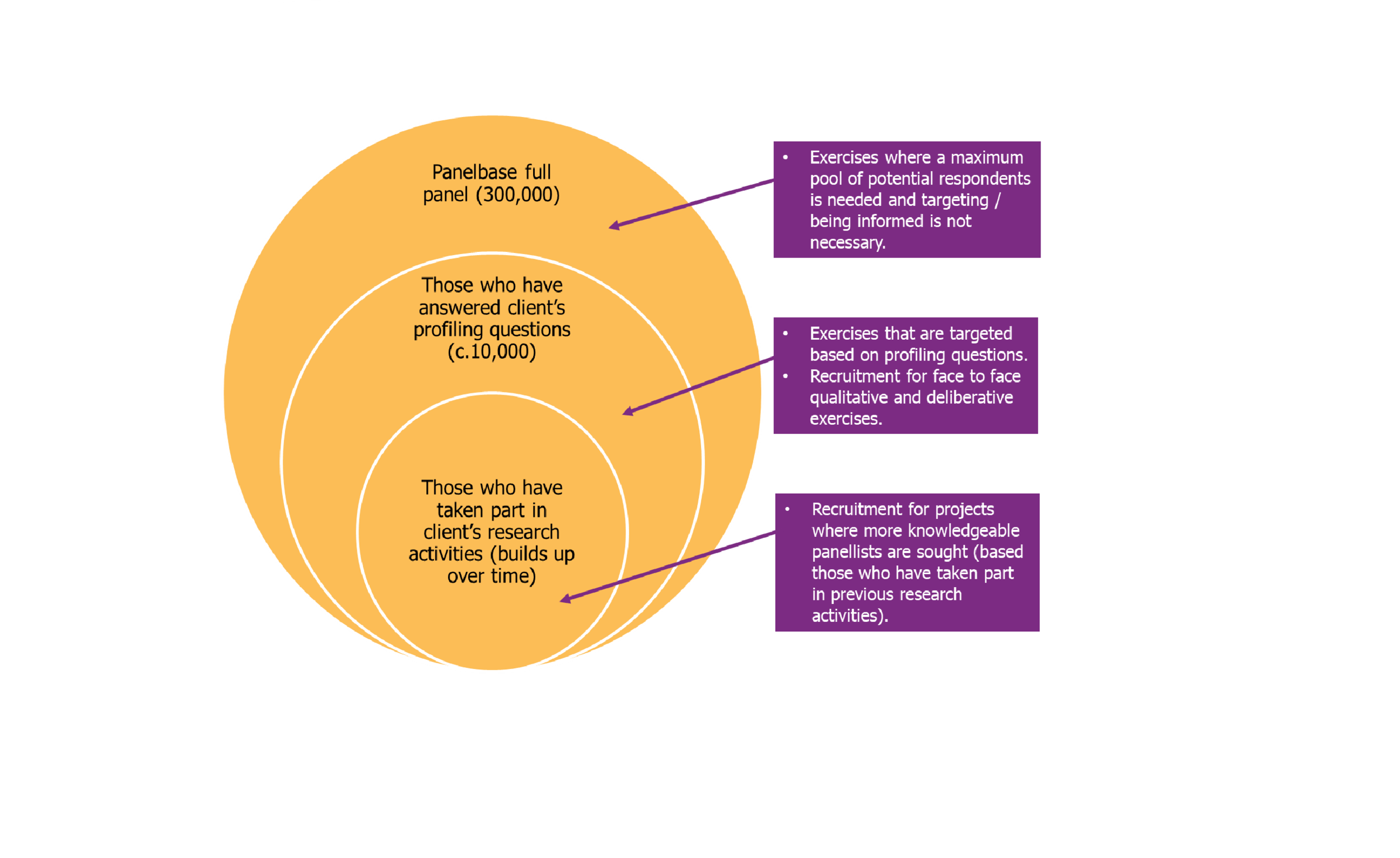
The Flexible Panel or Community - A New Approach
We have developed a new approach to panels – one that has recently been commissioned by two of our clients. The approach cuts the costs allocated to panel management and recruitment and ensures that more of our client’s budget can be devoted to research activities themselves. We’d like to share with you how it works.
Read More
Involving disabled people in research
For this installment in our series on involving ‘seldom-heard’ people in research, we have picked a big topic: involving disabled people in research. To help us steer our way through the complexities of this topic, we roped in Gordon McCullough, CEO of the Research Institute for Disabled Consumers (RiDC).
Read More
Engaging and consulting during Covid-19
The Consultation Institute has been considering the implications for those working in the field of engagement and consultation during this time of Corona virus crisis. Clearly engagement and consultation needs to continue in many sectors and the Institute has been providing advice and guidance on how best to approach this given the current restrictions.
Read More
Online deliberative research - the pros and cons
We’ve been adapting our approach to a number of projects in response to the constraints of lockdown. Of course, moving face to face deliberative research projects online, was always going to be the biggest challenge. Which begs the question - how far can you replicate face-to-face deliberation, in an online environment, and get meaningful results for clients? Of course, we have done plenty of online qualitative research before now, including deliberative elements, but we have generally designed complex deliberations, until now, as face to face activities. It has been an exciting and creative challenge for us, then, taking some of our planned deliberative projects and adapting them to an online setting.
Read More
Regulation in the future – will it matter?
We recently attended (and presented at) The Professional Standards Authority 2020 Conference on the subject of “Regulation in the future – will it matter?” The conference explored the long-term future of health professions regulation. Whilst focused specifically on health professions, many of the presentations and debates raised issues which have more widespread application.
Read More
Harnessing the power of story-telling
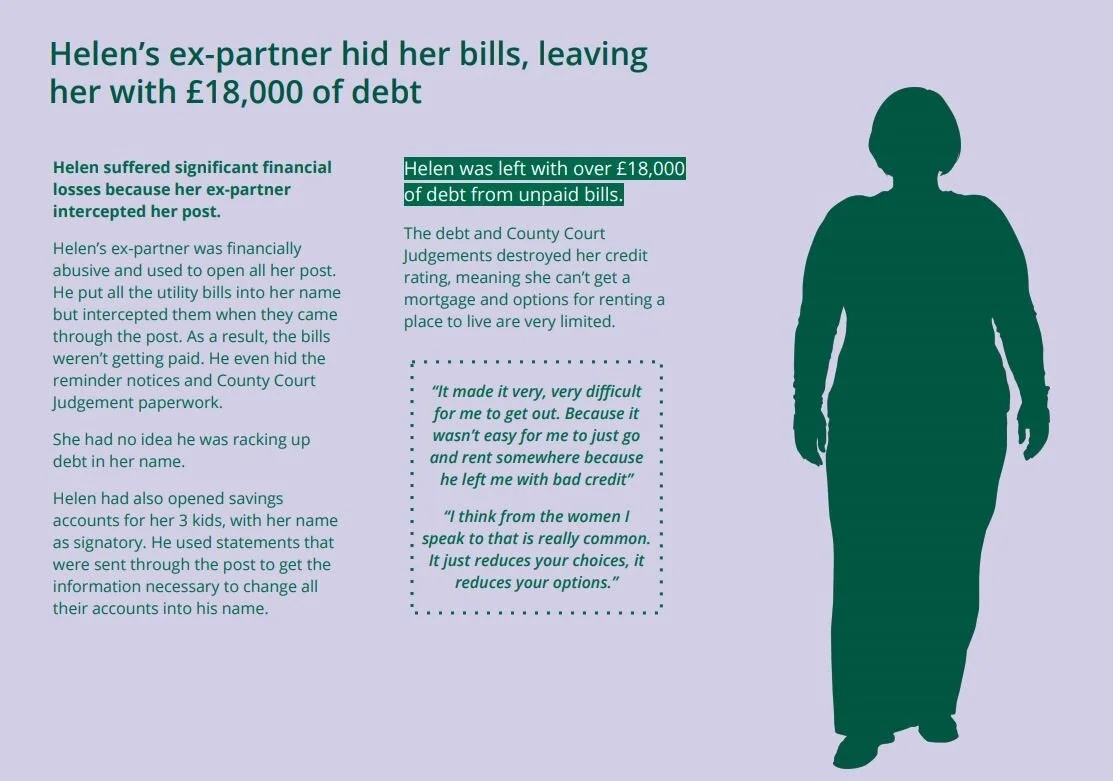
We are thrilled to see the recent publication of Citizens Advice’s report – “On the receiving end’’. To inform this report, we interviewed domestic abuse survivors and heard their stories of the debilitating effects that the lack of safe access to post had on their lives. The stories survivors shared with us were candid and often shocking. The power of these stories is compelling and we believe there is no better example of just how powerful storytelling, through research, can be.
Read More